
Quick Answer
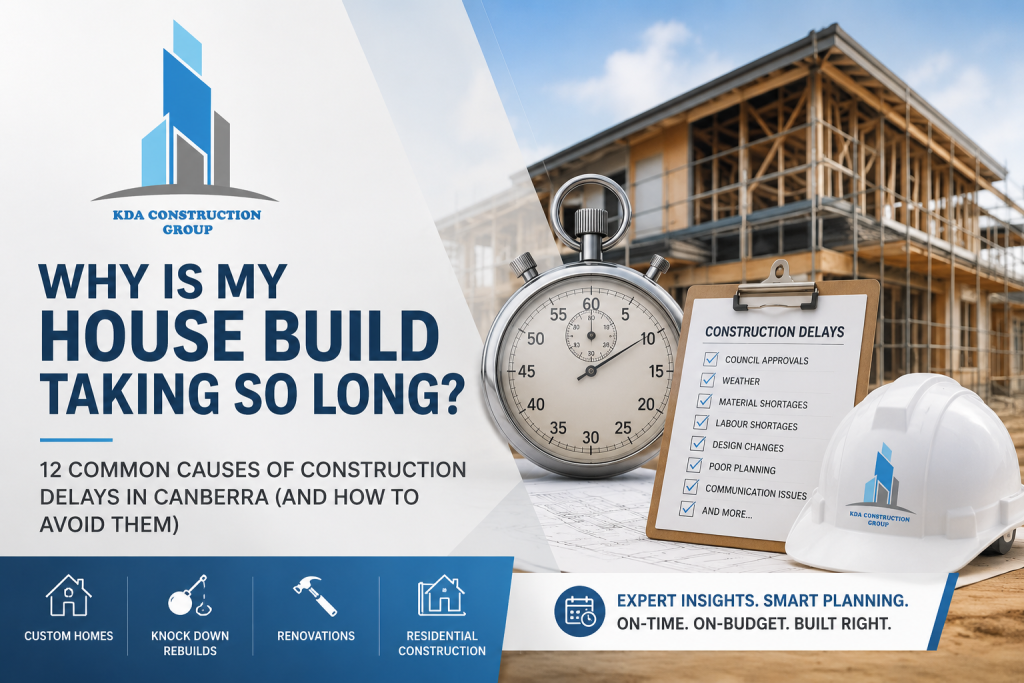
Construction delays are usually caused by permit approvals, material shortages, labour availability, weather conditions, design changes, site issues, poor planning, or communication breakdowns. While some delays are unavoidable, many can be prevented by working with an experienced builder, finalising decisions early, and maintaining a realistic project timeline.
If you’re building a custom home in Canberra, understanding these common causes can help you avoid costly delays, reduce stress, and keep your project moving forward.
Why Construction Delays Matter
Building a home is one of the largest investments most people will ever make. When construction falls behind schedule, the impact goes far beyond inconvenience.
Delays can lead to:
- Extended rental or temporary accommodation costs
- Increased loan and financing expenses
- Rising material prices
- Disrupted family plans
- Additional project management challenges
- Significant budget blowouts
The good news is that many construction delays can be anticipated and managed with proper planning and the right building partner.
How Long Does It Typically Take to Build a House in Canberra?
Although every project is different, a custom home generally progresses through several stages:
Planning and Design
This stage includes consultations, concept designs, architectural drawings, engineering assessments, and budget planning.
Council Approvals and Permits
Development approvals and building permits must be secured before construction begins.
Site Preparation
The site is cleared, excavated, and prepared for construction.
Construction Phase
This includes foundations, framing, roofing, internal fit-outs, and finishing works.
Final Inspections and Handover
The property undergoes inspections before being handed over to the homeowner.
While some projects move smoothly through each stage, delays can occur at any point.
12 Common Causes of Construction Delays
1. Delays in Council Approvals and Building Permits
Before construction can begin, plans must be reviewed and approved by the relevant authorities. Delays at this stage can affect the entire home-building timeline, particularly for custom homes and knockdown-rebuild projects.
Common causes include:
- Incomplete applications
- Missing reports or documentation
- Zoning restrictions
- Planning compliance issues
- Additional council review requests
How to Avoid It
Work with an experienced residential construction company that understands local approval requirements and submits accurate documentation from the start.
2. Poor Project Planning
A successful construction project starts long before the first slab is poured. Incomplete planning can create scheduling conflicts, budget issues, and delays throughout the build.
Common planning issues include:
- Unrealistic timelines
- Incomplete house designs
- Unfinalised selections
- Poor project scheduling
- Lack of contingency planning
How to Avoid It
Partner with a custom home builder in Canberra that follows a structured planning process and establishes clear project milestones before construction begins.
3. Unexpected Site Conditions
Not all site challenges are visible during the planning stage. Hidden issues can significantly affect both the timeline and cost of a residential construction project.
Common site-related delays include:
- Poor soil conditions
- Rock excavation
- Drainage problems
- Sloping blocks
- Underground service conflicts
How to Avoid It
Conduct detailed site assessments early to identify potential risks before construction starts.
4. Material Shortages and Supply Chain Delays
Many modern construction projects rely on materials sourced from multiple suppliers. Delays in manufacturing or shipping can impact critical stages of the build.
Common supply chain issues include:
- Backordered materials
- Imported product delays
- Supplier shortages
- Manufacturing disruptions
- Delivery scheduling problems
How to Avoid It
Order key materials early and work with builders who maintain strong supplier relationships.
5. Labour Shortages
The construction industry continues to face demand for skilled trades. If key contractors are unavailable, progress can slow across multiple stages of the project.
Common labour-related delays include:
- Shortages of electricians
- Limited plumbing availability
- Carpenter scheduling conflicts
- Roofing contractor delays
- High industry demand
How to Avoid It
Choose a builder with an established network of trusted trades and strong project management systems.
6. Design Changes During Construction
Making changes after construction begins is one of the most common causes of project delays. Even small modifications can affect approvals, materials, and scheduling.
Examples include:
- Changing floor plans
- Kitchen redesigns
- Upgrading finishes
- Adding extra rooms
- Altering structural elements
How to Avoid It
Finalise your custom home design before construction starts and carefully evaluate any changes during the build.
7. Budget Constraints and Funding Delays
Financial challenges can slow construction progress and create unnecessary stress for homeowners.
Common issues include:
- Loan approval delays
- Budget blowouts
- Unexpected project expenses
- Insufficient contingency funds
- Payment scheduling issues
How to Avoid It
Create a realistic construction budget and allow for unexpected costs before work begins.
8. Communication Breakdowns
Clear communication is essential for successful project delivery. Misunderstandings can result in mistakes, rework, and unnecessary delays.
Common communication problems include:
- Delayed decisions
- Unclear instructions
- Poor documentation
- Misaligned expectations
- Lack of project updates
How to Avoid It
Work with a builder that provides regular updates and maintains transparent communication throughout the project.
9. Subcontractor Scheduling Conflicts
Modern home construction involves multiple trades working in sequence. If one contractor falls behind, the entire schedule can be affected.
Common scheduling challenges include:
- Trade availability issues
- Project overlaps
- Delayed inspections
- Incomplete prerequisite work
- Rescheduling conflicts
How to Avoid It
Choose an experienced residential builder with proven trade coordination and scheduling processes.
10. Weather Conditions
Weather remains one of the most unpredictable factors in residential construction. Certain stages simply cannot proceed safely during adverse conditions.
Common weather-related delays include:
- Heavy rainfall
- Storm activity
- Flooding
- Extreme heat
- High winds
How to Avoid It
Build realistic contingency time into your project schedule and work with a builder experienced in managing weather-related risks.
11. Workplace Safety Incidents
Construction sites must meet strict safety standards. Incidents can temporarily halt work while investigations and corrective actions are completed.
Potential causes include:
- Site accidents
- Safety compliance issues
- Equipment failures
- Unsafe work practices
- Regulatory inspections
How to Avoid It
Partner with a construction company that prioritises workplace safety and maintains strong compliance procedures.
12. Scope Creep
Scope creep occurs when new features or changes are added after the project has started. While these upgrades may improve the finished home, they often extend timelines.
Common examples include:
- Additional living spaces
- Outdoor entertaining areas
- Luxury upgrades
- Smart home additions
- Structural modifications
How to Avoid It
Clearly define your project scope early and avoid unnecessary changes once construction is underway.
How Construction Delays Affect Your Budget
Many homeowners focus on the timeline impact of delays but underestimate the financial consequences.
Construction delays can increase costs through:
- Extended rental payments
- Additional storage expenses
- Increased labour costs
- Material price inflation
- Higher financing expenses
- Temporary accommodation requirements
This is why avoiding delays is one of the most effective ways to control your overall project budget.
How to Avoid Construction Delays
Although not every delay can be prevented, these strategies can significantly reduce risk:
- Finalise Your Design Early: Avoid major changes once construction begins.
- Secure Approvals Promptly: Submit complete applications and required documentation.
- Establish a Realistic Budget: Include contingency funds for unexpected expenses.
- Select Materials Early: Early procurement helps minimise supply chain disruptions.
- Maintain Clear Communication: Regular updates keep everyone aligned.
- Choose an Experienced Builder: An experienced builder can anticipate challenges before they become costly delays.
Why Choosing the Right Builder Matters
Successful construction projects are built on planning, communication, and experience.
An experienced builder understands how to:
- Manage timelines effectively
- Coordinate trades efficiently
- Navigate approvals and compliance requirements
- Identify potential risks early
- Minimise costly disruptions
Whether you’re building a custom home, planning a knock-down rebuild, or undertaking a major renovation, selecting the right construction partner can make a significant difference to your project’s outcome.
Final Thoughts
Construction delays can be frustrating, expensive, and disruptive. However, understanding the most common causes allows homeowners to make informed decisions and better prepare for their building journey.
By planning carefully, communicating clearly, and partnering with an experienced builder, you can minimise delays and keep your project on track from concept to completion.
Why Homeowners Choose KDA Construction Group
At KDA Construction Group, we understand that every delay affects your budget, schedule, and peace of mind. Our team specialises in custom home construction, luxury home building, residential construction, home renovations, and knock-down rebuild projects across Canberra.
Through detailed planning, transparent communication, and experienced project management, we help homeowners minimise delays and achieve a smoother building experience.
Whether you’re planning your dream home or considering a knock-down rebuild in Canberra, working with an experienced builder can make all the difference.
Frequently Asked Questions
1. What is the most common cause of construction delays?
The most common causes of construction delays include council approval issues, material shortages, labour availability, poor project planning, and design changes during construction. Many delays can be reduced by working with an experienced custom home builder and finalising plans before construction begins.
2. How long can council approvals delay a building project?
Approval timelines vary depending on the project’s complexity and local council requirements. In some cases, incomplete applications or additional documentation requests can delay residential construction projects by several weeks or even months.
3. Can changing my house design during construction cause delays?
Yes. Design changes made after construction has started often require updated drawings, revised approvals, additional materials, and rescheduling of trades. Even small modifications can affect the overall home-building timeline and increase construction costs.
4. How do material shortages affect custom home construction?
Material shortages can delay critical stages of a project if products are unavailable or backordered. Custom homes and luxury home construction projects are particularly affected when specialised materials, imported products, or custom finishes are involved.
5. How can I avoid delays when building a custom home in Canberra?
The best way to minimise delays is to choose an experienced custom home builder in Canberra, finalise your design early, secure approvals promptly, establish a realistic budget, and maintain clear communication throughout the construction process.
6. Do construction delays increase the overall cost of building a home?
Yes. Delays can lead to higher labour costs, extended rental expenses, material price increases, financing costs, and additional project management expenses. Keeping your residential construction project on schedule is one of the most effective ways to control your overall budget.